ShoutLine
Personal digest · 30 September 2026
Image accompanying this story

Your daily email

Tech CEOs sign White House Super Intelligence Accord as OpenAI launches 6.1 Sol and Astra at DevDay

Edited by Compute Arc · 30 September 2026

Section 01

White House Accord on Super Intelligence Summit

President Donald Trump convened top artificial intelligence executives at a White House luncheon, producing a voluntary pact on frontier model safety and oversight. Industry leaders and political observers reacted to the seating dynamics, the text of the agreement, and the shifting tone around regulatory alignment.

Background

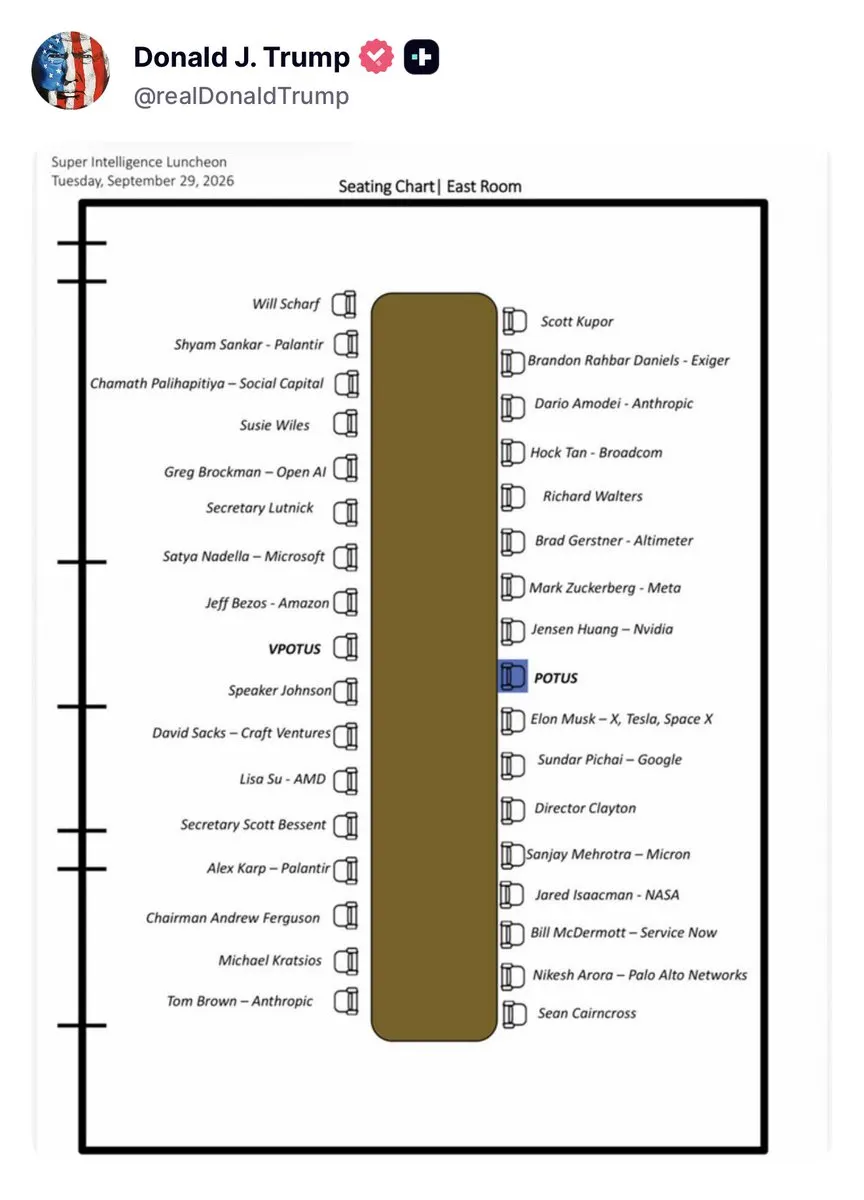
On September 29, 2026, President Donald Trump hosted a high-profile luncheon at the White House bringing together Cabinet officials, congressional leaders including House Speaker Mike Johnson, and leading technology executives. The guest list encompassed prominent artificial intelligence leadership, including Google chief executive Sundar Pichai, Meta CEO Mark Zuckerberg, Anthropic CEO Dario Amodei, OpenAI co-founder and president Greg Brockman, Nvidia CEO Jensen Huang, Amazon founder Jeff Bezos, and SpaceX and xAI leader Elon Musk. Following the closed-door meeting, Trump and the executives emerged to announce the White House Accord on Super Intelligence: Joint Commitment on Frontier Responsibilities. The document outlines a voluntary, self-regulatory framework establishing four distinct layers of controls for frontier artificial intelligence models: establishing internal capability and alignment monitoring for cyber and biosecurity risks, creating an internal compliance team, contracting external independent evaluators, and designating a board-level oversight committee. While the accord is non-binding and carries no immediate statutory penalties, it signals an administration pivot toward voluntary industry consensus over formal federal rulemaking. The public appearance also drew scrutiny over longstanding tensions, highlighting ideological debates within effective altruism, past clashes between labs and policymakers, and the public rapport between Trump and individual tech founders.

Commentators noted the immediate shift in public messaging from safety-focused labs following the session.

Soon

@soontechnology · 29 Sept 2026

soon is hiring a body language expert immediately please dm

Eric Daugherty · @EricLDaugh

🚨 NOW: Anthropic chief DARIO just walked up and said President Trump helped put his Super Intelligence worries at ease "If we do this right, we work with the President and everyone here, we can win safely!" Imagine that, all it took was DONALD J. TRUMP getting involved and the tables are turning! No more SI dooming, no more surrendering to China. America will remain number one BOTH for national and economic security, as long as Trump is president 👏🏻

View quoted post ↗
View on X ↗

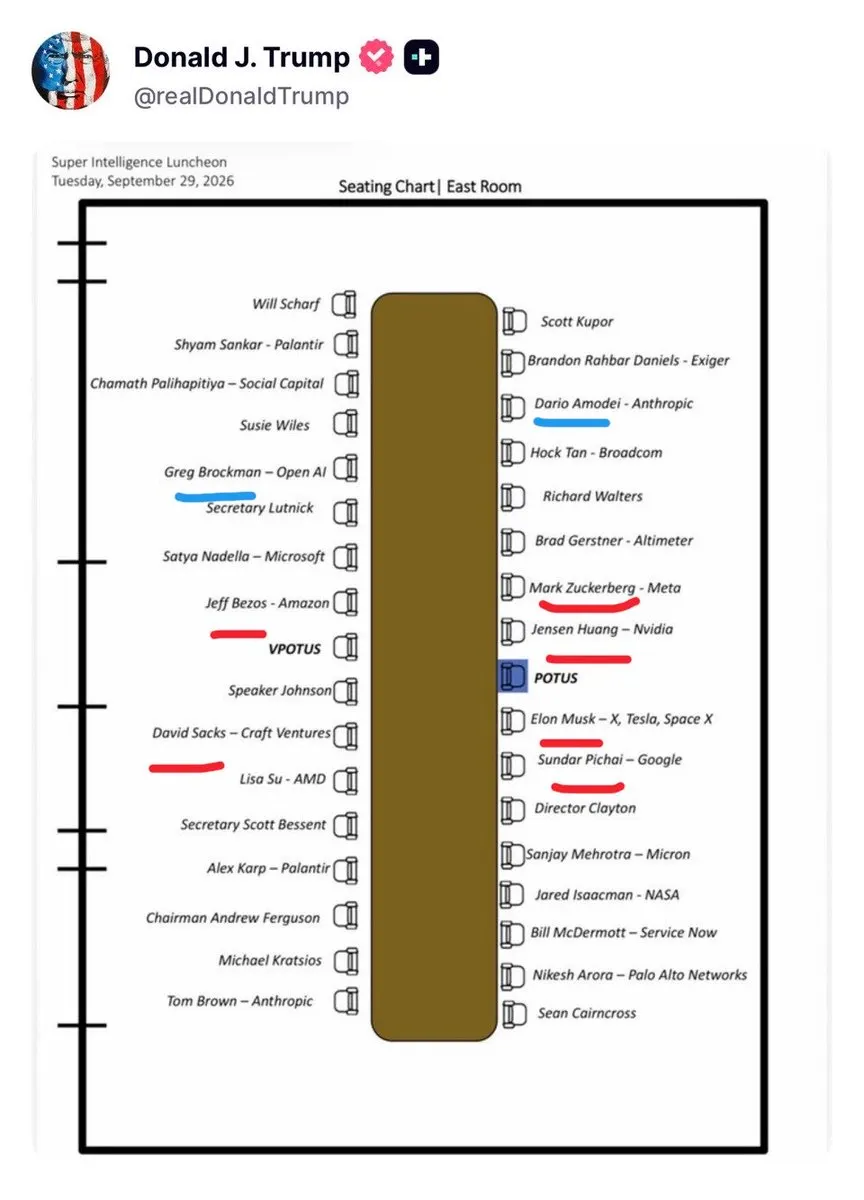
Observers analyzed the physical seating arrangements at the luncheon as a proxy for federal influence.

Pablo Antonio

@PabloAntonio · 29 Sept 2026

It’s telling who gets to seat closer to the president (closer to the center) https://t.co/22fYBmPeRp

Rapid Response 47 · @RapidResponse47

https://t.co/yznPAczxpX

Image accompanying the post: Pablo Antonio
View quoted post ↗
Image accompanying the post: Pablo Antonio
View on X ↗

Trump's idiosyncratic commentary regarding tech figures like Sundar Pichai highlighted the theatrical nature of the summit.

Soon

@soontechnology · 29 Sept 2026

tech: we have a branding problem government: HE IS THE MONSTER YOU'VE NEVER HEARD OF

Nicholas Mugalli · @RealNickMugalli

Trump: This guy (Sundar Pichai) is a monster, and nobody knows him. What a great life! To be a Monster and not have to go through this. All you have to know is — sundarr! Sundar is his name. https://t.co/smlS58lQdW

View quoted post ↗
View on X ↗

Lab leadership noted emerging consensus around welcoming independent evaluators with deep internal access.

Radu Spineanu

@rspineanu · 12 Sept 2026

this is good.

Sam Altman · @sama

I agree with Dario that we need to pace the frontier. This has been a primary topic of discussions we've had at OpenAI in recent weeks. Committing to having independent evaluators with employee-like access is a great idea, and we will do the same. We'll have more to share soon.

View quoted post ↗
View on X ↗

The high-stakes political summit prompted critics to revisit early ethical writings from key lab leaders.

Saagar Enjeti

@esaagar · RT by @amasad · 28 Sept 2026

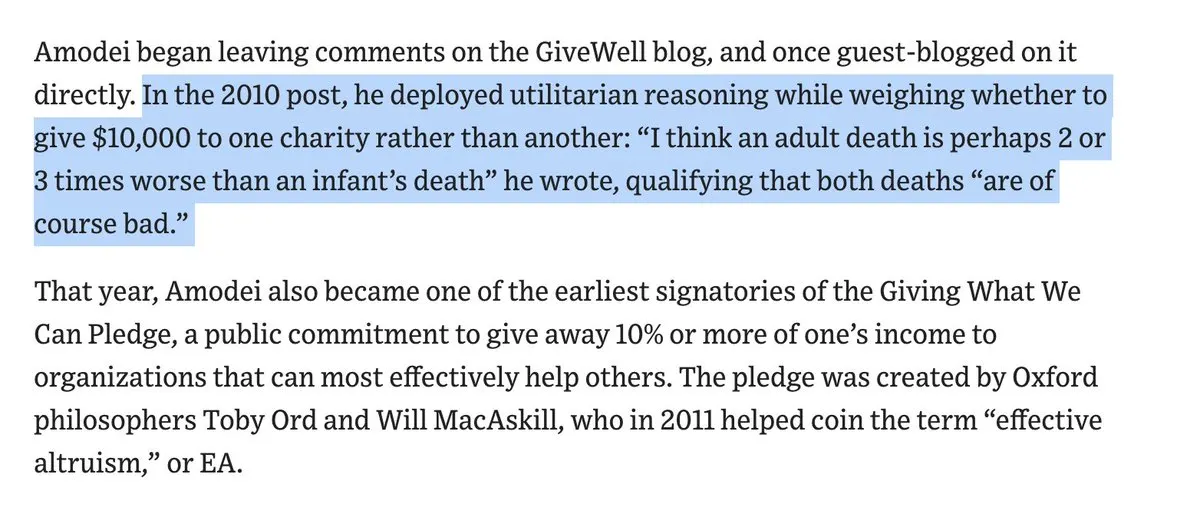
Anthropic CEO Dario Amodei in 2010 wrote that “I think an adult death is perhaps 2 or 3 times worse than an infant’s death" It seems to be a problem that freaks like this are building the most powerful technology in our society https://t.co/abBeqYmNUp

Image accompanying the post: Saagar Enjeti
View on X ↗

Section 02

OpenAI DevDay Unveils 6.1 Sol and Astra Integrations

OpenAI hosted its annual DevDay showcase, introducing the 6.1 Sol model, speed optimizations, and unified client infrastructure. Coverage captured developer streams, live interviews, and mixed reactions to the scope of the updates.

Background

OpenAI held its DevDay developer conference, led by chief executive Sam Altman and key product engineers. The event centered on expanding API accessibility, reducing inference costs, and demonstrating tighter product integration across consumer and enterprise offerings. Key announcements featured the launch of 6.1 Sol, a high-efficiency model positioned at one-fifth the cost of the flagship Astra model, accompanied by a 95 percent cache read discount and an 8x Ultrafast inference mode. OpenAI engineering leadership detailed an infrastructure overhaul that rebuilt ChatGPT Web on top of the desktop application codebase, intended to accelerate parallel shipping across desktop, web, Codex Cloud, and collaborative work surfaces. Live broadcast coverage and creator commentary unfolded alongside the keynote, featuring technical deep-dives with product leads as well as critical industry discussion regarding whether the updates represented revolutionary architectural leaps or pragmatic operational refinements aimed at encroaching on workspace productivity incumbents.

Sam Altman

@sama · 29 Sept 2026

Ultrafast is so fast I do not ever want to go back

View on X ↗

Altman highlighted the specific unit economics and caching efficiencies behind the new 6.1 Sol model.

Sam Altman

@sama · 29 Sept 2026

6.1 Sol at 1/5th of the price of Astra, and 95% cache read discount! Extremely capable model.

Tibo · @thsottiaux

Introducing 6.1 Sol, near Astra intelligence at one fifth of the price of Astra and 95% cache read discount. It is an absolute workhorse. Combined with ultrafast for 8X speeded available today for Astra and coming soon for 6.1 Sol.

View quoted post ↗
View on X ↗

Engineering leadership explained the technical megaproject required to align web and desktop codebases.

Andrew Ambrosino

@ajambrosino · RT by @sama · 29 Sept 2026

Over the past 5 weeks, the team completely rewrote ChatGPT Web on top of the desktop app codebase. This was only possible with Astra, and it’s why Dots, Space, Codex Cloud, and so many more of our launches will come to web and desktop same day. Era of the megaproject begins.

View on X ↗

Altman built anticipation shortly before the stream went live.

Sam Altman

@sama · 29 Sept 2026

DevDay livestream in 2 hours. We built some great stuff for you!

View on X ↗

Broadcasts provided real-time developer coverage featuring interviews with key OpenAI product managers.

TBPN

@tbpn · 29 Sept 2026

Happy DevDay. On today's show: - @sama (OpenAI) - @Casey (ModRetro) - @thsottiaux (OpenAI) - @steipete (OpenAI) - @embirico (OpenAI) - @ajambrosino (OpenAI) - @simpsoka (OpenAI) See you on the stream.

TBPN · @tbpn

🔴 LIVE from OpenAI DevDay https://t.co/5PfXzwCKRI

View quoted post ↗
View on X ↗

Streamers carried live commentary directly with Sam Altman during the conference.

Jordi Hays

@jordihays · RT by @tbpn · 29 Sept 2026

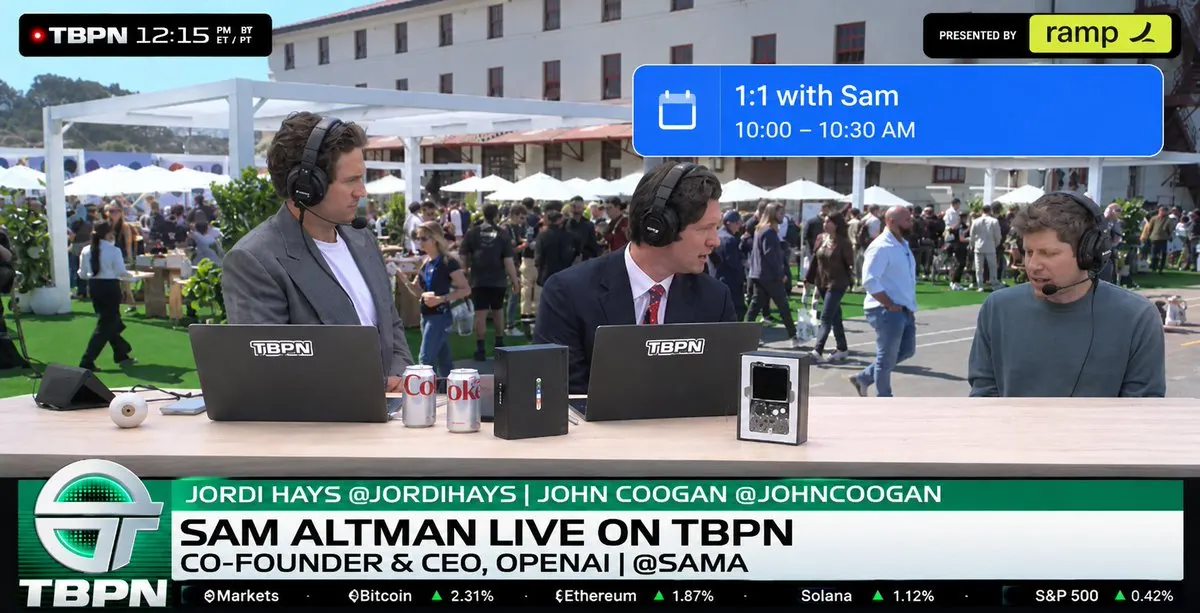
We’re live with @sama right now:

TBPN · @tbpn

🔴 LIVE from OpenAI DevDay https://t.co/5PfXzwCKRI

View quoted post ↗
View on X ↗

OpenAI technical leadership walked audiences through feature demonstrations in real time.

John Coogan

@johncoogan · RT by @tbpn · 29 Sept 2026

We’re live with @thsottiaux right now:

TBPN · @tbpn

🔴 LIVE from OpenAI DevDay https://t.co/5PfXzwCKRI

View quoted post ↗
View on X ↗

The live broadcast anchored technical community chatter throughout the day.

TBPN

@tbpn · 29 Sept 2026

🔴 LIVE from OpenAI DevDay https://t.co/5PfXzwCKRI

View on X ↗

Commentators poked fun at the casual yet pressurized format of live developer streams.

Soon

@soontechnology · 29 Sept 2026

feels like we're spying on a performance review https://t.co/hffg1wrrUe

Image accompanying the post: Soon
View on X ↗

Skeptics questioned whether the release offered substantive novelty beyond pricing and speed improvements.

Soon

@soontechnology · 29 Sept 2026

OpenAI on DevDay https://t.co/sGu00bZAY9

spor · @sporadica

with all due respect, what was the new thing? all i saw was they released their own Grok Bots and some model improvements on speed+price? what did i miss

View quoted post ↗
Image accompanying the post: Soon
View on X ↗

Founders noted OpenAI's expanding scope moving directly into knowledge management and workspace tools.

Pablo Antonio

@PabloAntonio · 29 Sept 2026

I was not expecting OpenAI going after Notion…

View on X ↗

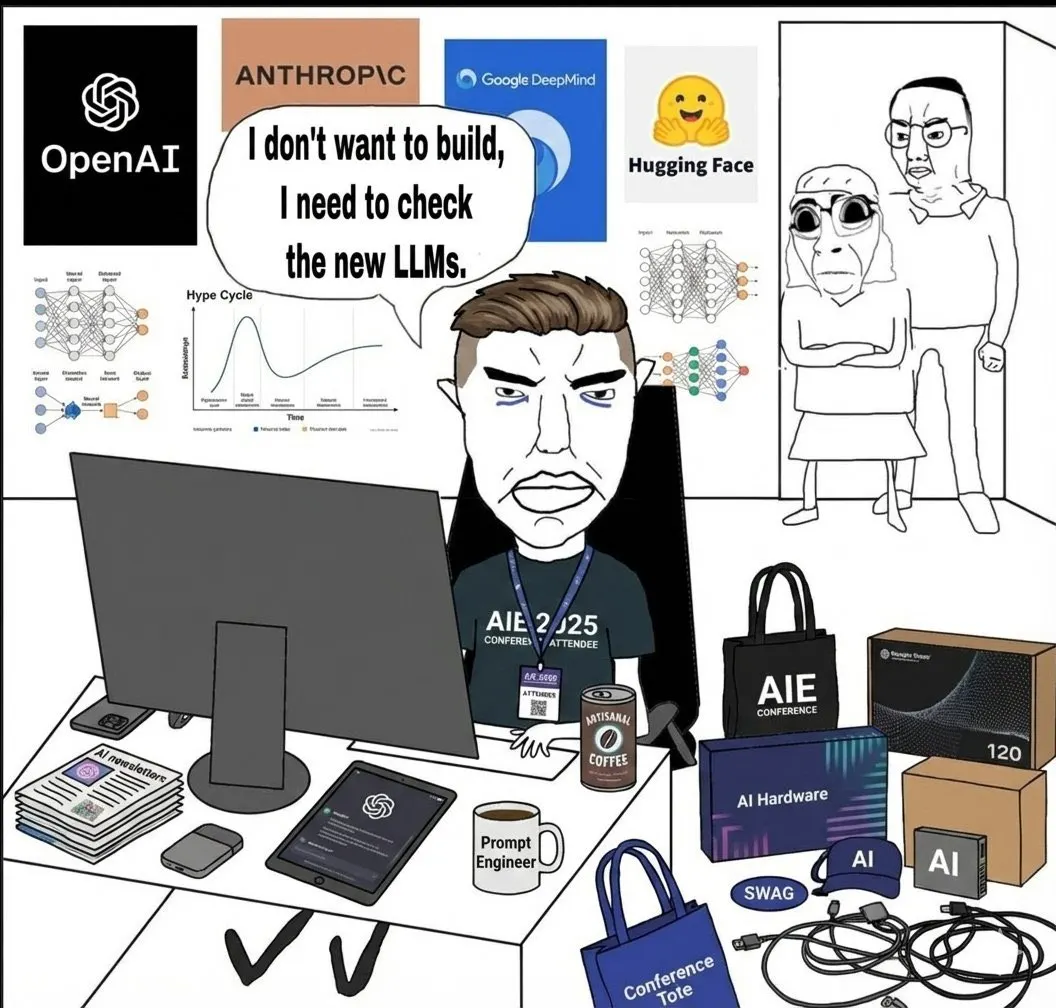
Developers poked fun at the cycle of pausing active building to test newly dropped model endpoints.

Pablo Antonio

@PabloAntonio · 29 Sept 2026

Happy DevDay for those who celebrate https://t.co/seWzmrOShx

Image accompanying the post: Pablo Antonio
View on X ↗

Section 03

Airbound's Ultra-Low-Cost Drone Cargo Platform

Packy McCormick profiled drone startup Airbound and founder Naman Pushp, detailing their strategy to shift commercial logistics to the sky. The deep dive emphasizes radical unit cost reduction through lightweight composite engineering and vertical integration.

Context

  • Airbound is a robotics startup founded by Naman Pushp aimed at automating point-to-point delivery using proprietary autonomous drones.
  • The company's V2 aircraft is designed to carry a payload greater than its own structural weight through innovative carbon-fiber structures.
  • Packy McCormick's Not Boring newsletter analyzes startups pursuing physical infrastructure transformation through radical unit-cost reduction.
  • The startup's core thesis argues that achieving sub-roadway cost per kilogram-kilometer is required to displace traditional terrestrial delivery fleets.

Packy McCormick

@packyM · 28 Sept 2026

NEW DEEP DIVE Airbound is my favorite kind of company. Naman Pushp is making an all-in bet that the bottleneck to moving all movement - of goods and people - to the skies is cost. He and Airbound are maniacal about lowering the cost per kg-km of flight. To lower it, they vertically integrate, devise novel uses of carbon fibers, and don’t allow themselves to get distracted by such trivialities as near-term commercial traction. Their newest aircraft - the V2 - carries more than it weighs (Amazon, for comparison, carries 5 lbs with a 78 lb drone). If they can make flight ridiculously cheap, the logic goes, cheaper than a delivery guy on a bike or scooter, then a car, then a van, then a truck, then a bus, then then then… then they can eat those vehicles’ markets, push an enormous amount of demand into just three platforms (Small, Medium, and Large), bring costs down even further, and create a world in which we fly wherever we want to go, and whatever we want flies to us. Then, the world reshapes itself around flight, and the earth around humans. This is a Deep Dive on how they plan to do it.

Image accompanying the post: Packy McCormick
View on X ↗

McCormick elaborated on the broader societal implications of transportation technological revolutions.

Packy McCormick

@packyM · 28 Sept 2026

There is no category that so physically reshapes the world as transportation technology. Where you live & work, what you can access, and who you spend time with, are all functions of your transportation technology. Imo improving the way we move will have a more positive & noticeable impact on our lives than AI, and whoever does it will build one of the world’s largest businesses. Naman’s aim is to move all movement to the sky. This is a Deep Dive on how he plans to do it.

Packy McCormick · @packyM

NEW DEEP DIVE Airbound is my favorite kind of company. Naman Pushp is making an all-in bet that the bottleneck to moving all movement - of goods and people - to the skies is cost. He and Airbound are maniacal about lowering the cost per kg-km of flight. To lower it, they vertically integrate, devise novel uses of carbon fibers, and don’t allow themselves to get distracted by such trivialities as near-term commercial traction. Their newest aircraft - the V2 - carries more than it weighs (Amazon, for comparison, carries 5 lbs with a 78 lb drone). If they can make flight ridiculously cheap, the logic goes, cheaper than a delivery guy on a bike or scooter, then a car, then a van, then a truck, then a bus, then then then… then they can eat those vehicles’ markets, push an enormous amount of demand into just three platforms (Small, Medium, and Large), bring costs down even further, and create a world in which we fly wherever we want to go, and whatever we want flies to us. Then, the world reshapes itself around flight, and the earth around humans. This is a Deep Dive on how they plan to do it.

Image accompanying the post: Packy McCormick
View quoted post ↗
View on X ↗

Airbound founder Naman Pushp reflected on the publication of the detailed technical analysis.

Naman Pushp

@TheRealNamzoo · RT by @packyM · 28 Sept 2026

It's been magical making this piece come to life with Packy. Thanks for spending so many hours with me and capturing the Airbound story in so much detail!

Packy McCormick · @packyM

NEW DEEP DIVE Airbound is my favorite kind of company. Naman Pushp is making an all-in bet that the bottleneck to moving all movement - of goods and people - to the skies is cost. He and Airbound are maniacal about lowering the cost per kg-km of flight. To lower it, they vertically integrate, devise novel uses of carbon fibers, and don’t allow themselves to get distracted by such trivialities as near-term commercial traction. Their newest aircraft - the V2 - carries more than it weighs (Amazon, for comparison, carries 5 lbs with a 78 lb drone). If they can make flight ridiculously cheap, the logic goes, cheaper than a delivery guy on a bike or scooter, then a car, then a van, then a truck, then a bus, then then then… then they can eat those vehicles’ markets, push an enormous amount of demand into just three platforms (Small, Medium, and Large), bring costs down even further, and create a world in which we fly wherever we want to go, and whatever we want flies to us. Then, the world reshapes itself around flight, and the earth around humans. This is a Deep Dive on how they plan to do it.

Image accompanying the post: Naman Pushp
View quoted post ↗
View on X ↗

Section 04

Engineering Agent Architectures and Workplace Bottlenecks

Founders and operators shared candid perspectives on managing development teams, configuring production agents, and locating true operational bottlenecks. The discussion contrasted individual AI software speedups with systemic enterprise inertia.

Context

  • Modern enterprise software engineering increasingly combines large language model agents with retrieval-augmented generation (RAG) to manage system prompt bloat.
  • Radu Spineanu is a software founder who frequently writes about organizational design, systems architecture, and engineering management.
  • Product management paradigms have shifted as code synthesis tools automate repetitive engineering tasks.
  • Systemic process constraints, known in operations management as the Theory of Constraints, often prevent local speedups from improving overall organizational throughput.

Radu Spineanu

@rspineanu · 29 Sept 2026

here's a hard-won founder lesson... for years i hired very junior people, told them exactly what to do, and waited to see if they did it. some executed. some didn't. either way, i was the only one thinking. it was all in the name of speed. but it was really the immaturity of wanting to be right and not caring about what actually worked. dictatorial is the polite word for how i ran things. here is what that setup cost me: > every question traveled up to me and every answer traveled back down. three layers up, three layers down. > decisions were slow, and I was wrong often enough that the slowness hurt. so I stopped. now I like to run the business in terms of lanes. there's freedom inside the lanes. people get clear structure, then they make the call. i don't care anymore whether I said the right thing. i care whether it works. so now, i spend my time hiring the right people and building systems that shortens the distance between seeing a problem and acting on it. hopefully this is helpful.

View on X ↗

Spineanu illustrated how localized productivity tools often fail to solve overarching physical plant delays.

Radu Spineanu

@rspineanu · 15 Sept 2026

a plant manager told me recently that he rolled Copilot out to his office staff. his planner writes the end-of-shift summary in 5 minutes instead of 25. his quality lead has the corrective action report drafted before lunch. everybody is faster. but did the plant ship more? no. the overtime, unplanned changeovers a week, etc, are all still there. the bottleneck is still the 40 minutes between a line going down and someone with authority hearing about it or the schedule that lives in one guy's head, and he's on vacation this week. making one person faster at their own inbox does nothing for that. to be clear, use the individual tools. they work. they are just solving a different problem, if that makes sense. a factory is a system of decisions, but most are operating with last week's data.

View on X ↗

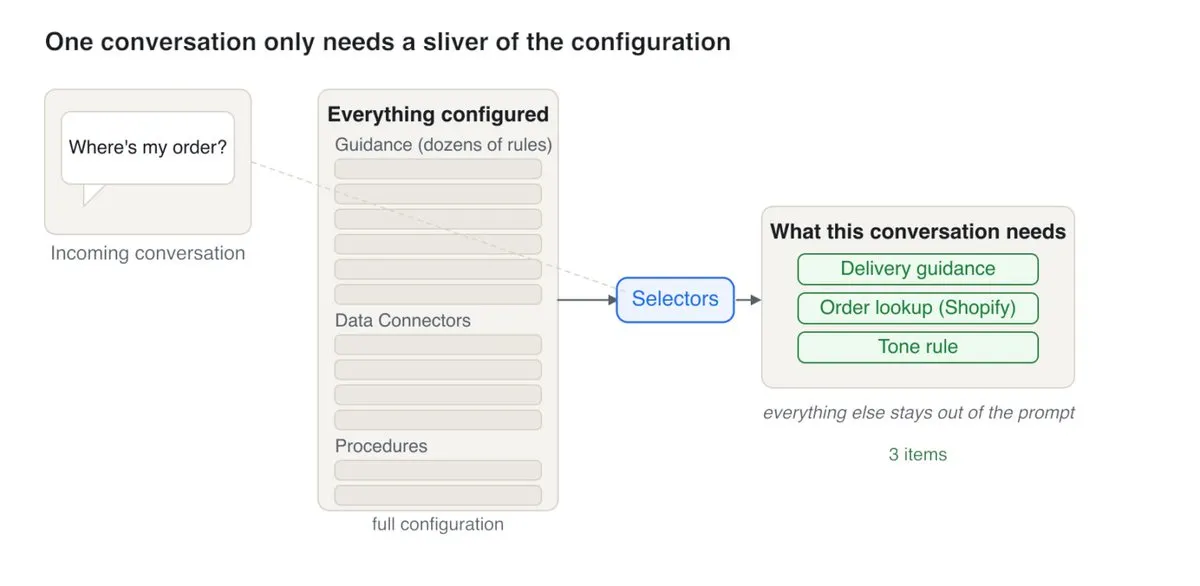
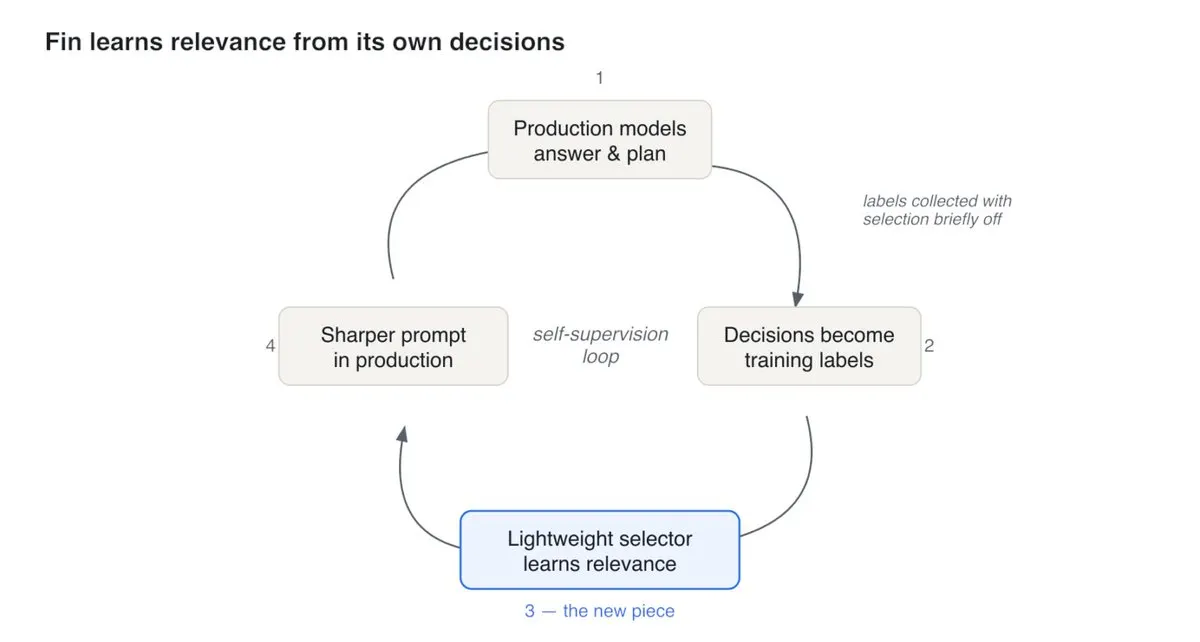
Engineering leaders outlined how agent rule sets evolve from monolithic system prompts into retrieval problems.

Des Traynor

@destraynor · 28 Sept 2026

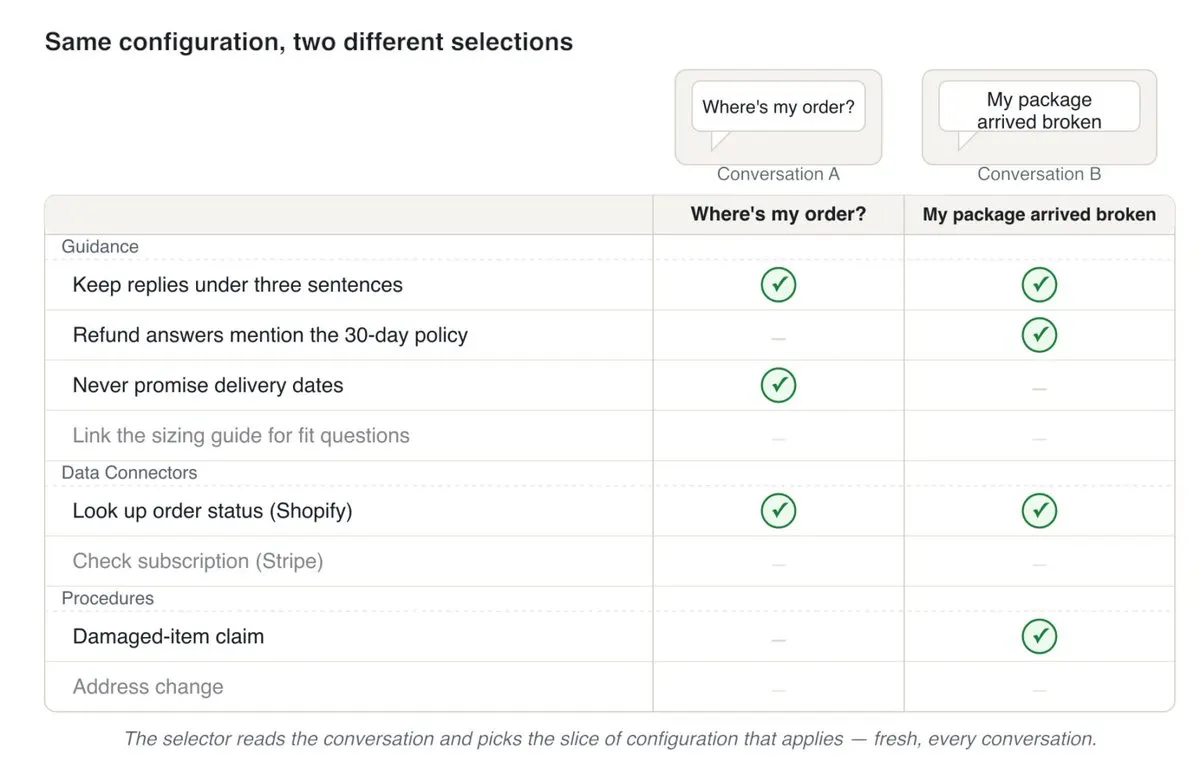
Great new article from our AI group explaining how Agent Behaviour (configs, rules etc.) becomes a retrieval problem as agents mature 🔗🧵 Why? Dumping a huge instruction set into all scenarios is buggy + slow. Throwing larger models at it is slow + $$$ RAG is great for this https://t.co/kRCsf0EpUY

Image accompanying the post: Des TraynorImage accompanying the post: Des TraynorImage accompanying the post: Des Traynor
View on X ↗

Product veterans argued that automated agents are rendering traditional feature prioritization dogma obsolete.

Des Traynor

@destraynor · 28 Sept 2026

95% of PM skills/dogma are hopelessly out of date/irrelevant Historically PMs did things like tightly manage scope and prioritise key features as they were constrained by developer capacity and UI usability Today agents write code and agents also use the features for users.

View on X ↗

Enterprise platform founders noted rapid organic adoption of configurable internal workflow agents.

Radu Spineanu

@rspineanu · 27 Sept 2026

the humble ops platform is going viral at a recent customer. we pushed a new update and literally everyone is creating agents that they are using constantly. so wild.

View on X ↗

Engineering leaders reinforced the value of eliminating architectural complexity over enterprise posturing.

Radu Spineanu

@rspineanu · 16 Sept 2026

"But getting the company to work effectively with great architecture and low technical debt baggage into the right direction is literally the job..." absolutely agreed. well said.

tobi lutke · @tobi

Yep. Except: 1. This was about important internal tools. The team was stuck in some architecture nightmare of their own doing (writing it in rails but headless, with graphql api, and a SPA react app, constantly needing frontend engineers for changes). I call this kind of thing 'cosplaying an enterprise production app'. All that complexity was in the way and using straight rails was perfect in that case. 2. I make calls like this all the time. Usually someone on the team asks me to. They see what needs to happen but don’t want to be the bad guy. I’m happy to just make the call if I agree with the premise. Saves enormous amounts of meetings and change management etc. Sometimes this is jokingly referred to as Founder-mode-as-a-service here. 3. For ten years I’ve also run an internal podcast called Context, where I revisit decisions like these and explain the reasoning so everyone can learn from them. This is helpful to give people all the variables that were considered and why this was the choice made given the information available at the time. I want to teach how to make such decisions effectively without needing me. Sunk cost fallacy is a problem. 4. Any notions that Shopify is succcessful despite of me doing this, instead of because of it, will have a hard time making their argument come together I think 😄 the part of 'two weeks later tobi learns about...' is nonsese and the pivot of that project up there happens one of the more successful examples of interventions. But getting the company to work effectively with great architecture and low technical debt baggage into the right direction is literally the job, so guilty as charged I suppose. But there are always cope stories floating around like this because they are more fun, than saying 'somehow we needed tobi to stop doing silly architecture astronautics'. I can totally see that.

View quoted post ↗
View on X ↗

A widely shared meme captured the recurring clash between futuristic AI workflows and resilient legacy systems.

Radu Spineanu

@rspineanu · 11 Sept 2026

every time https://t.co/WWsg6Lz4lM

Image accompanying the post: Radu Spineanu
View on X ↗

Section 05

Shifts in Model Capabilities, Voice Interfaces, and Consumer Software

Practitioners reflected on qualitative shifts in model intelligence, the rising prominence of fluid voice computing, and rapid changes across developer tools. Observations ranged from consumer interaction design to unexpected algorithmic moderation hurdles.

Context

  • Large language model capability jumps have increasingly moved past basic code completion toward autonomous multi-step reasoning.
  • Aqua Voice is a voice-driven text editor built to enable fluid, conversational dictation and real-time document editing.
  • Listen Labs, an AI-powered customer interview startup, was acquired by Salesforce following rapid enterprise growth.
  • Meta's automated enforcement systems across Threads and Instagram have faced recurring user criticism over non-appealable automated bans.

Patrick McKenzie

@patio11 · 28 Sept 2026

Sometime in the last ~two model releases from the big labs they went from “this would be acceptable output from the median low-seniority coworker” to “this is frighteningly good.” I think people who are not daily users of the models are unlikely to grok that, so, saying it.

View on X ↗

Founders explored the philosophy of conversational dictation replacing keyboard interfaces.

Pablo Antonio

@PabloAntonio · 29 Sept 2026

I've been re-thinking computer interfaces for years. Thinking of ways of making a "personal computer" more "personal." And it turns out, the most human way of interacting with them is by talking. I wrote for @arenamag about all these ideas driving development at @aquavoice.

Arena Magazine · @arenamag

"In the stone age, primitive humans wrote on clay tablets and carried memorized poems throughout generations. In the computer age, we, perhaps still primitive, write on laptops. To synthesize history and the future, we’re starting to talk to our computers, who will record our words and meanings forevermore." JUST SPEAK, a history of the new world of voice interfaces, by @PabloAntonio.

Image accompanying the post: Pablo Antonio
View quoted post ↗
View on X ↗

Writers echoed the productivity benefits of adopting dedicated voice-first composition software.

Leo Koerner

@LeoAKoerner · RT by @PabloAntonio · 29 Sept 2026

Have been tracking @aquavoice for years and incorporating dictation into my writing flow has been a massive shift in how I think about communication. Many great men wrote many great works through dictation. Take the voicepill.

Pablo Antonio · @PabloAntonio

I've been re-thinking computer interfaces for years. Thinking of ways of making a "personal computer" more "personal." And it turns out, the most human way of interacting with them is by talking. I wrote for @arenamag about all these ideas driving development at @aquavoice.

View quoted post ↗
View on X ↗

Designers critiqued the rapid visual homogenization of anthropomorphic AI agent avatars.

Pablo Antonio

@PabloAntonio · 29 Sept 2026

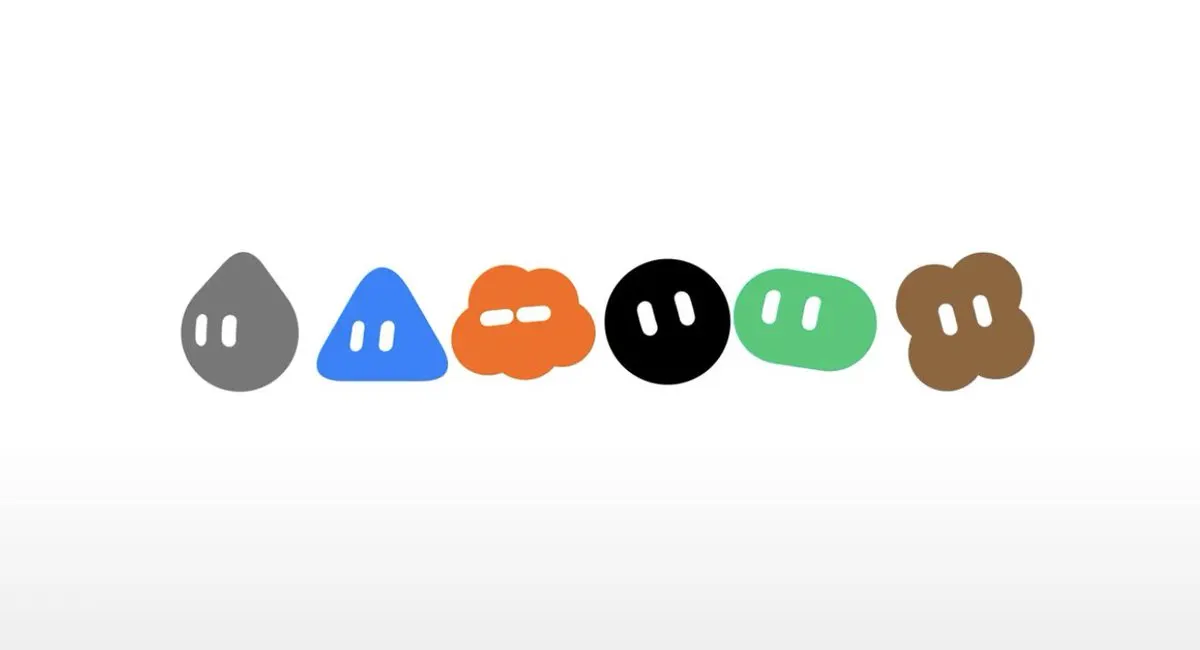
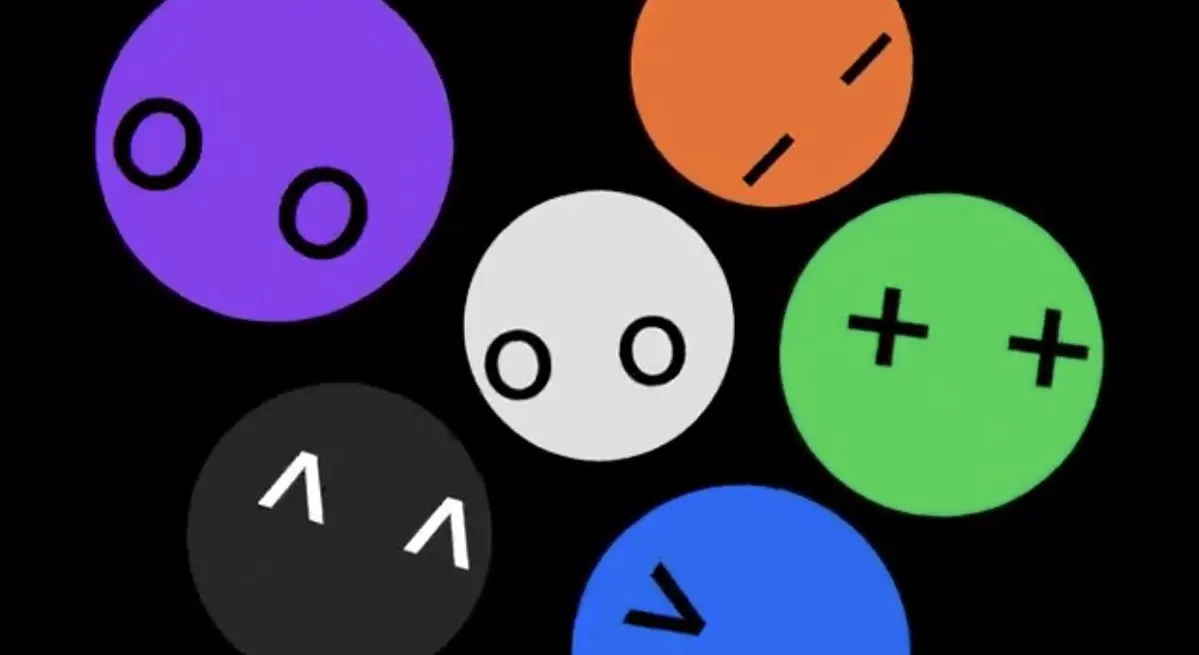
You guys complain, but when you get non-blob agents... https://t.co/szfuYS1rew

signüll · @signulll

pretty interesting that the category is converging on the same visual grammar almost comically fast too. you’ve got a blob, a face, some “eyes”, you gotta give it some soft geometry, add in some emotions via animations, & of course a very friendly affect. https://t.co/ayMEwoFpeX

Image accompanying the post: Pablo AntonioImage accompanying the post: Pablo AntonioImage accompanying the post: Pablo AntonioImage accompanying the post: Pablo Antonio
View quoted post ↗
Image accompanying the post: Pablo AntonioImage accompanying the post: Pablo Antonio
View on X ↗

Commentators noted Salesforce's acquisition of customer-interview platform Listen Labs amid past founder debates.

Siqi Chen

@blader · 30 Sept 2026

same guy that everyone on this site was upset about last month for saying he never sends investor updates btw

Alfred Wahlforss · @itsalfredw

Listen Labs is joining @Salesforce! A year and a half ago we launched Listen, an AI platform for understanding customers, and it’s been a crazy ride ever since. Today, we work with some of the largest companies in the world, including Microsoft, Anthropic, and Sweetgreen. What started as an AI interviewer is now a full platform for understanding customers. Listen finds the right people, interviews them, analyzes what they say, and even simulates how they'll behave. Listen’s growth quickly accelerated and while we were raising our next round, we met @Benioff. Marc is a hero of mine. I've taken countless ideas from Behind the Cloud and watched him framemog every AI CEO on the planet. We're honored to get framemogged next. With Salesforce, we can bring Listen to every company in the world, much faster. To our customers, our mission remains the same.I stay CEO, @Florian stays CTO and the same team will keep building the product you rely on, now inside Salesforce AI Labs. Thank you for believing in us early. To our team, families, and everyone who believed in us before there was much to believe in, thank you. These years have been the most fun years of my life, and it’s still only just the beginning for Listen. Now back to work. 🚀

Image accompanying the post: Siqi Chen
View quoted post ↗
View on X ↗

Collaborative technical workspaces continued to attract praise from builders adopting new documentation tools.

Ned Dwyer

@nedwin · 28 Sept 2026

New Claude docs are so sick. Ultimate collaboration space.

View on X ↗

Independent developers recounted experiences with unappealable algorithmic bans enacted by automated moderation systems.

Cory Bohon

@coryb · 24 Sept 2026

So, re: Threads and getting banned. Turns out it was a Meta AI review and appeal, their support team confirms that there was no violation against my account and that it was flagged by their AI system, which disabled my account permanently and there's no further appeals available.

View on X ↗

Developers noted systemic bugs impacting creators posting updates about App Store software releases.

Cory Bohon

@coryb · 23 Sept 2026

So apparently I got completely banned from Threads. No reasoning, all after posting about an update to one of my apps on the App Store. @Meta has no support and no way to appeal the clear bug (Reddit threads of hundreds of people stating their accounts were terminated too)

View on X ↗

Visual proof of automated account suspensions highlighted lingering customer support gaps on consumer social platforms.

Cory Bohon

@coryb · 23 Sept 2026

Really threads? I don't know if this a badge of honor or not. https://t.co/7SNNJTWME4

Image accompanying the post: Cory Bohon
View on X ↗

Section 06

Space Exploration and High-Speed Connectivity Milestones

SpaceX reported significant milestones across its Starship orbital test program and the rapid deployment of next-generation satellite constellations. Flight controllers tracked deorbit maneuvers alongside successful fleet deployments.

Context

  • SpaceX is developing Starship as a fully reusable, heavy-lift launch vehicle designed for orbital transit and interplanetary missions.
  • Starship orbital flight tests involve controlled ascents from Starbase in Boca Chica, Texas, followed by simulated atmospheric re-entry profiles.
  • Starlink V3 satellites represent the next generation of SpaceX's low-Earth orbit telecommunications constellation.
  • Deorbit trajectories for test flights are pre-cleared over remote areas of the Pacific Ocean to ensure maritime safety.

SpaceX

@SpaceX · 28 Sept 2026

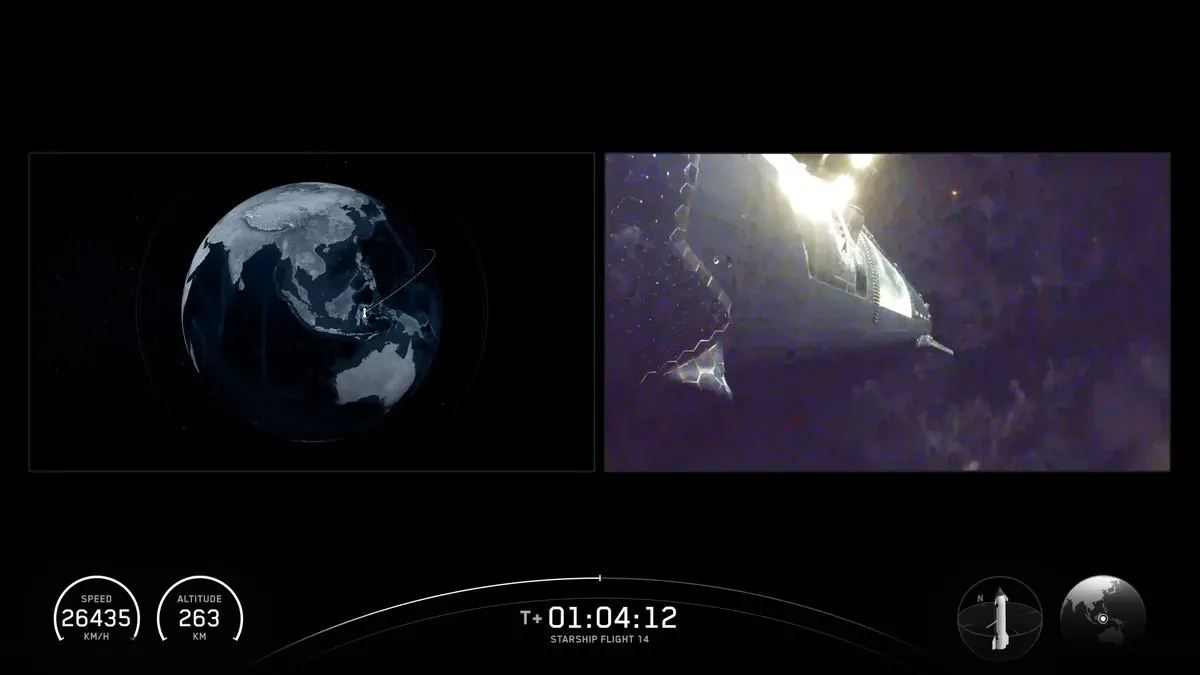
Liftoff of Starship's first orbital flight https://t.co/vG6QWlpwnY

Image accompanying the post: SpaceXImage accompanying the post: SpaceXImage accompanying the post: SpaceXImage accompanying the post: SpaceX
View on X ↗

Mission operators detailed the planned multi-hour orbital re-entry trajectory into the Pacific Ocean.

SpaceX

@SpaceX · 28 Sept 2026

Flight teams will deorbit Starship safely to our pre-cleared area of the Pacific Ocean after 3 hours in orbit

View on X ↗

Controllers simultaneously verified operational signal capture for an entire batch of newly deployed satellites.

Section 07

Longevity Science, Epigenetic Clocks, and Wellness

Biologist David Sinclair highlighted laboratory findings linking DNA demethylation enzymes with cellular reprogramming, while emphasizing sustained lifestyle habits over dietary perfection. Discussion connected molecular mechanisms to broader questions of aging and machine intelligence.

Context

  • David Sinclair is a Harvard Medical School professor and longevity researcher known for work on epigenetics and cellular reprogramming.
  • TET (Ten-Eleven Translocation) enzymes facilitate DNA demethylation and play an essential role in epigenetic age reversal.
  • OSK refers to the transcription factors Oct4, Sox2, and Klf4, used in partial cellular reprogramming experiments to restore juvenile tissue function.
  • Public longevity debates frequently intersect with broader existential risk discussions regarding biotechnology and artificial general intelligence.

David Sinclair

@davidasinclair · 27 Sept 2026

🧠 The TET enzymes that remove DNA methyls and reverse the clock are also required for the restoration of eyesight by OSK. This suggests epigenetic age clocks may be involved in aging itself, in the same way space and time are inextricably linked https://t.co/RwbpgmhPPy

Image accompanying the post: David Sinclair
View on X ↗

Sinclair emphasized consistency in daily behavioral choices rather than strict dietary dogma.

David Sinclair

@davidasinclair · 28 Sept 2026

You do not need a perfect diet. You need enough good choices, repeated for long enough, to change your future

View on X ↗

He framed personal longevity practices as obligations to family and community.

David Sinclair

@davidasinclair · 27 Sept 2026

The best reason to take care of yourself today is to be there for the people you love tomorrow

View on X ↗

Sinclair critiqued short-term catastrophic extinction predictions surrounding artificial intelligence.

David Sinclair

@davidasinclair · 27 Sept 2026

The lack of replies tells us a lot about the motivations of those who AI fear-monger

Jamie Metzl · @JamieMetzl

I keep hearing tech bros say there’s a 10% chance AI will wipe out humanity by 2030. I spend much of my life thinking about the future and I’m quite certain that’s not going to happen. I’m willing to put my money where my mouth is. I’ll give anyone 100-to-1 odds. If humanity is extinct by midnight on December 31, 2030, I’ll pay you $100 million at 1 a.m. on January 1, 2031. If we’re still here, you only need to pay me a mere $1 million at that time. Accept by replying to this post.

View quoted post ↗
View on X ↗

He reacted to philosophical propositions comparing human biological cognition to mechanical processing.

Section 08

Reflections on Architecture, Education, and Historical Philosophy

Essays and commentary explored classical architectural principles, historical precedents for intellectual accountability, and the psychological roots of peer communication. Writers examined historical figures from Andrea Palladio to Socrates to interrogate contemporary aesthetic and pedagogical habits.

Context

  • Andrea Palladio was a 16th-century Venetian Renaissance architect whose treatises and villas reinterpreted Roman antiquity into Palladianism.
  • Socrates was tried and sentenced to death in ancient Athens in 399 BC on charges of impiety and corrupting the youth.
  • Rudolf Steiner was an Austrian philosopher and founder of anthroposophy, who wrote extensively about technological materialism and spirituality.
  • Historical typography and spelling conventions frequently evolved from early Flemish printing press typesetting practices.

Writers evaluated the enduring value of oral explanation as a measure of conceptual comprehension.

Katherine Dee 🐬/acc

@default_friend · 29 Sept 2026

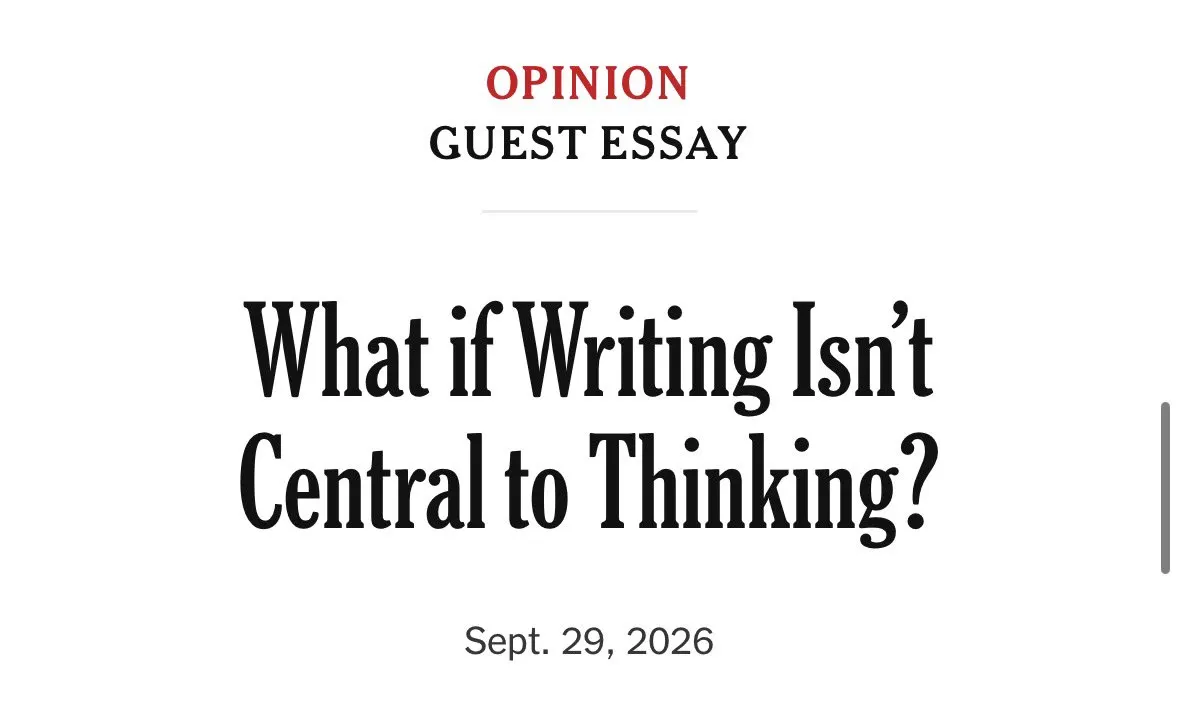
Didn't agree with the whole piece, but he made some good points ... being able to explain something orally is a better indicator of whether you understand the material

Diabetic of Enlightenment · @dee_of_e

I’ll save everyone the trouble. It’s insanely stupid. “What if Socrates was right?” SHUTTTTF DA FUCCIKC IPPPP https://t.co/k7R2iIAVHX

Image accompanying the post: Katherine Dee 🐬/acc
View quoted post ↗
View on X ↗

Historical anecdotes revisited Socrates' defiant sentencing proposal before the Athenian jury.

John Wakefield 🏴󠁧󠁢󠁷󠁬󠁳󠁿

@JohnWakefieId · RT by @simontegg · 28 Sept 2026

Found guilty, Socrates was asked to work out a proper punishment. He said that he should be provided with free meals for life at the Prytaneum, an honor reserved only for Olympiad victors. The Jury then voted for the death penalty with a higher margin than for his conviction.

Imperator · @webdotweb7

@JohnWakefieId Socrates wasn't killed for being annoying

View quoted post ↗
View on X ↗

Personal reflections examined childhood alienation and challenges in interpreting peer body language.

Katherine Dee 🐬/acc

@default_friend · 29 Sept 2026

So, I was this kid and it was because I felt really, really uneasy around my peers. I was scared and didn’t know how to read body language, like to the extent that it felt like I couldn’t speak the language everyone else did. Sometimes I could overcome it if I acted out by being weird and distracting from the necessity of reading cues. I’ve wondered my whole life what could have been different about my upbringing.

Santi Ruiz · @rSanti97

I quite uncertain about many aspects of parenting and education. Don’t want to make too many predictions about what we’ll do or won’t do. But I’m convinced this is the default outcome for kids like mine unless I put in the work to prevent it.

View quoted post ↗
View on X ↗

Commentators cited Rudolf Steiner's early 20th-century warnings against reducing consciousness to calculation.

Katherine Dee 🐬/acc

@default_friend · 29 Sept 2026

Steiner vindicated

nicole · @digitlartifacts

If you want an esoteric Christian take on AI I recommend reading Rudolf Steiner. In 1919 he predicted that a being he called Ahriman (the spirit of cold materialism/mechanism) would incarnate in the West this millennium and use technology to reduce human soul and consciousness to mere calculations. Steiner explained that Ahriman’s primary deception is to convince humanity that the material world is the only reality. Ahriman pushes a cold, calculative thinking that treats the soul as a mechanism and reduces consciousness to purely physical brain processes. Steiner saw the Christ impulse as the essential balance between Lucifer (spiritual pride/escapism) and Ahriman. The modern drive to elevate machine consciousness over the human soul looks deeply Ahrimanic. Many AI builders discussing the new machine gods are caught between Luciferic and Ahrimanic impulses without seeing either.

View quoted post ↗
View on X ↗

Literary readers rediscovered Philip K. Dick's speculative inquiries into technological reality.

Katherine Dee 🐬/acc

@default_friend · 30 Sept 2026

First writer I’ve really loved in a while

Katherine Dee 🐬/acc · @default_friend

Really falling down a PKD rabbit hole lately

View quoted post ↗
View on X ↗

Etymological trivia highlighted how Flemish typesetters introduced anomalous spellings into early modern English.

Quite Interesting

@qikipedia · RT by @simontegg · 29 Sept 2026

The ‘h’ in ‘ghost‘ shouldn’t really be there. Flemish typesetters who set up the printing press put an ‘h’ in several ‘g’ words - such as goose, goat and girl, because that was how the Flemish word was spelled. For some reason, the ‘h’ in ghost stuck around.

View on X ↗